
COURTYARDS & GARDENS
Courtyards & Gardens at THE RAJ PALACE
Royal Living Redefined
The Indian nobility's belief in their divine right to power manifested itself in the planning of palaces. The palace was designed following architectural guidelines described in ancient Indian texts known as the Vastushastras some of which are more than fifteen hundred years old and was meant to be a physical and spiritual microcosm of the universe. The central courtyard of a palace was said to be the building's most powerful point, and always contained a representation of a prominent deity. Views of the courtyard and deity could thus be enjoyed from each of the palace's residential quarters.
CHARBAGH
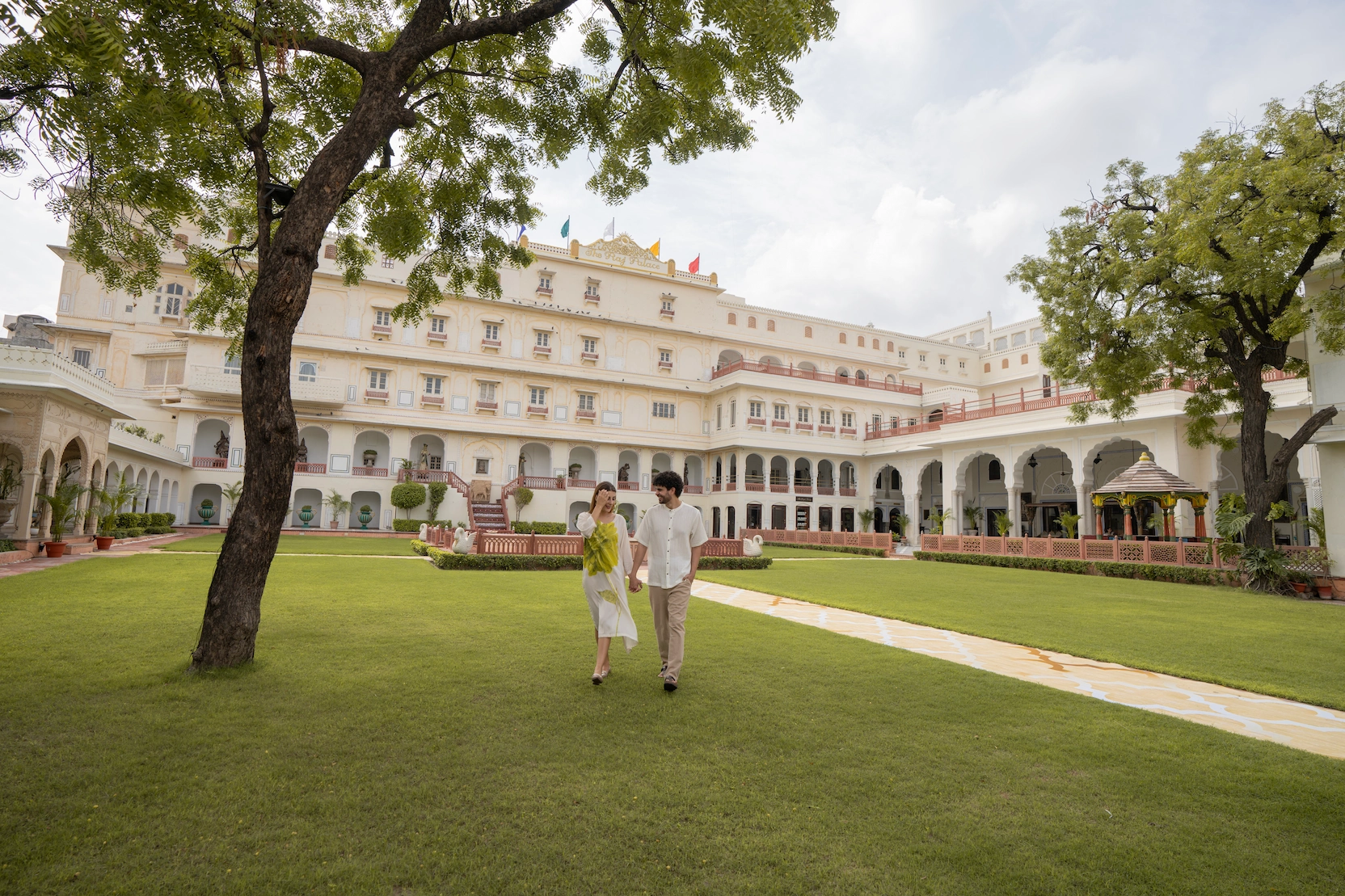
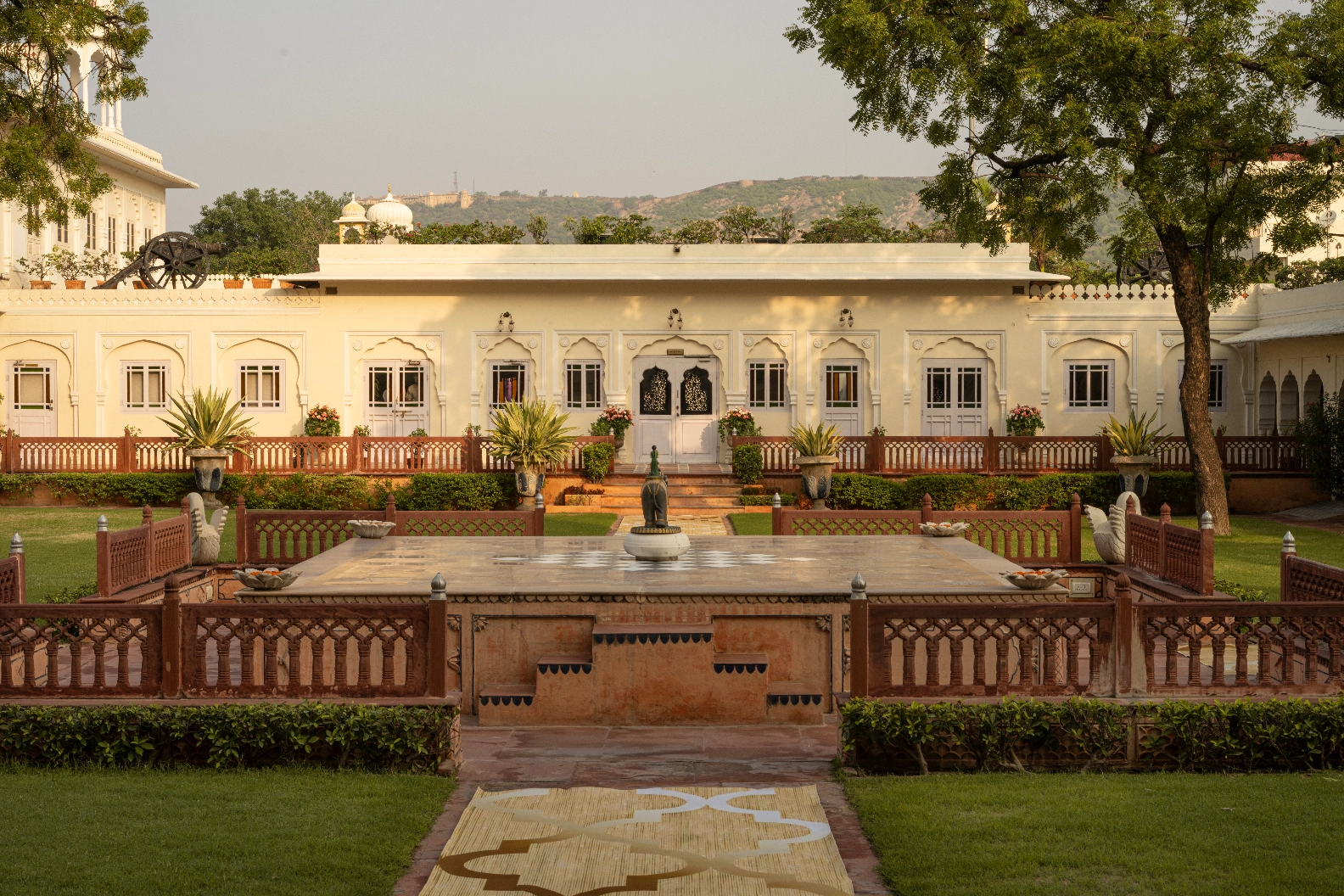
Indian rulers and their courtiers drank, ate and listened to music in the privacy of verdant, breathtaking gardens. Gardens were planned according to geometric patterns and were usually arranged in plots of four, known in Persian as charbagh. Court celebrations such as Holi took place in gardens, during which courtiers squirted each other with vivid colors.
CHANDANI CHOWK
Another expression of the Royals divine powers was the belief that the palace was microcosmic reconstructions of the universe. According to Indian manuals on architecture and town planning, the Vastushastras, some of which are more than fifteen hundred years old, the most powerful point was the central square, the seat of the most prominent deity. And hence this area was visible from all the residential areas of palace The palace is built on a system of nine squares and this is supposed to be having the best effect on human body and mind.
MAYUR CHOWK
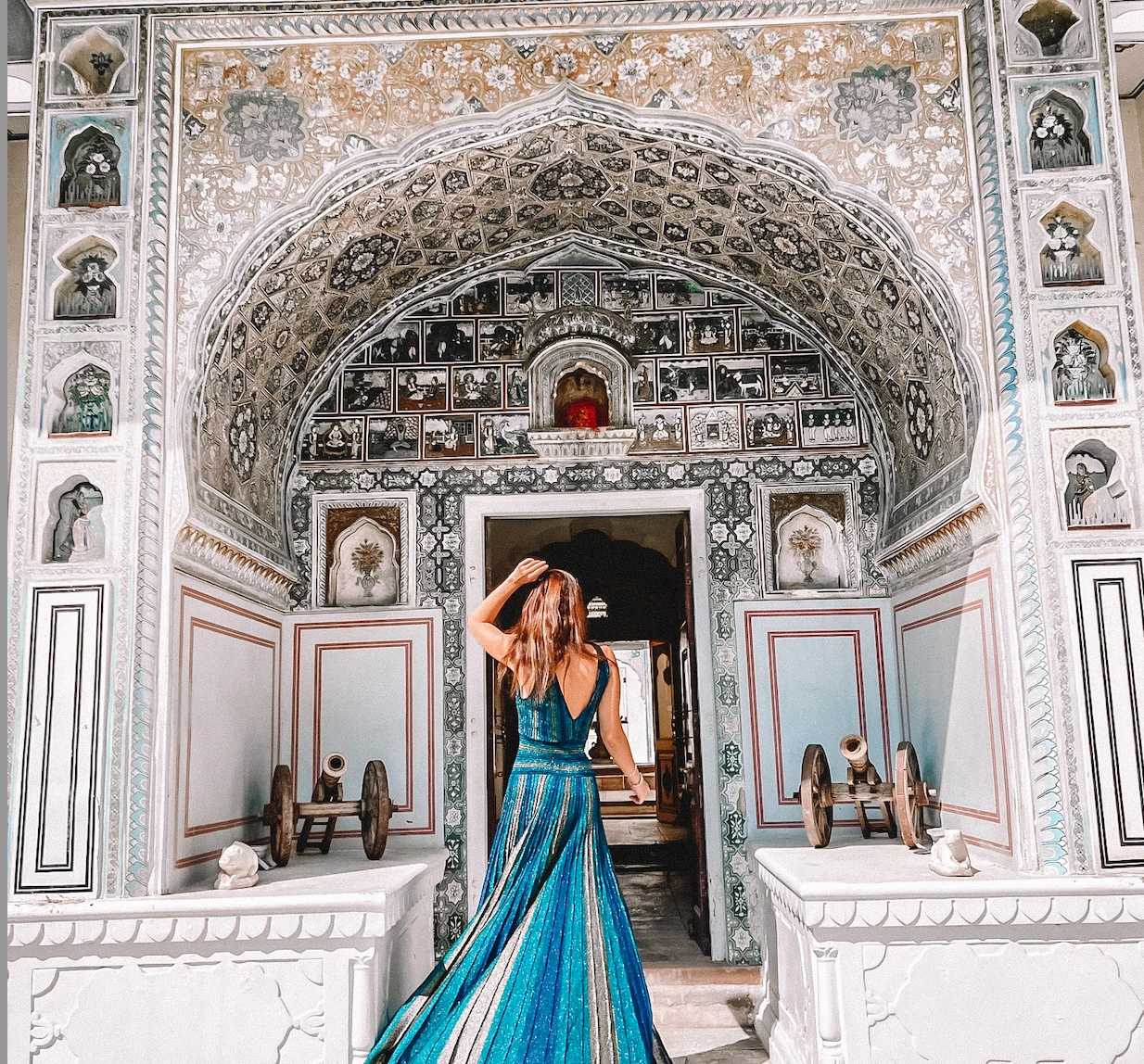
Royal architecture had to provide suitable settings for private pleasures where monarchs could meet with their queens and concubines. Miniature paintings executed at the Mughal and Rajput courts give a good idea of the erotic life of the court. An often repeated scene shows the royal figure at night accompanied by one or more female consorts seated in an upper pavilion of the palace, or laying on a terrace beneath an awning. Cushions are spread out and there are cups for wine and other intoxicating drinks, as well as strays filled with fruits and sweetmeats. Female attendants, discreetly posed to one side, are present even at the most intimate moments. Storm clouds with lightning and distant views of forests with flying birds , peacocks enhance the erotic aspects of the scene.
ZENANA CHOWK
The Zenena was not the only private zone within Indian palaces: the monarch himself required seclusion from the more public activities of the court. Access to the Thakur Sahibs apartments, including his sleeping chamber and the adjacent rooms for his personal use, was strictly guarded; only those summoned could enter. Other parts of the palace were for the sovereign’s entertainment, where he could sit surrounded by small groups of male guests smoking the hookah, enjoying reading of poetry or listening to performances of music
MAHARANI BAGH
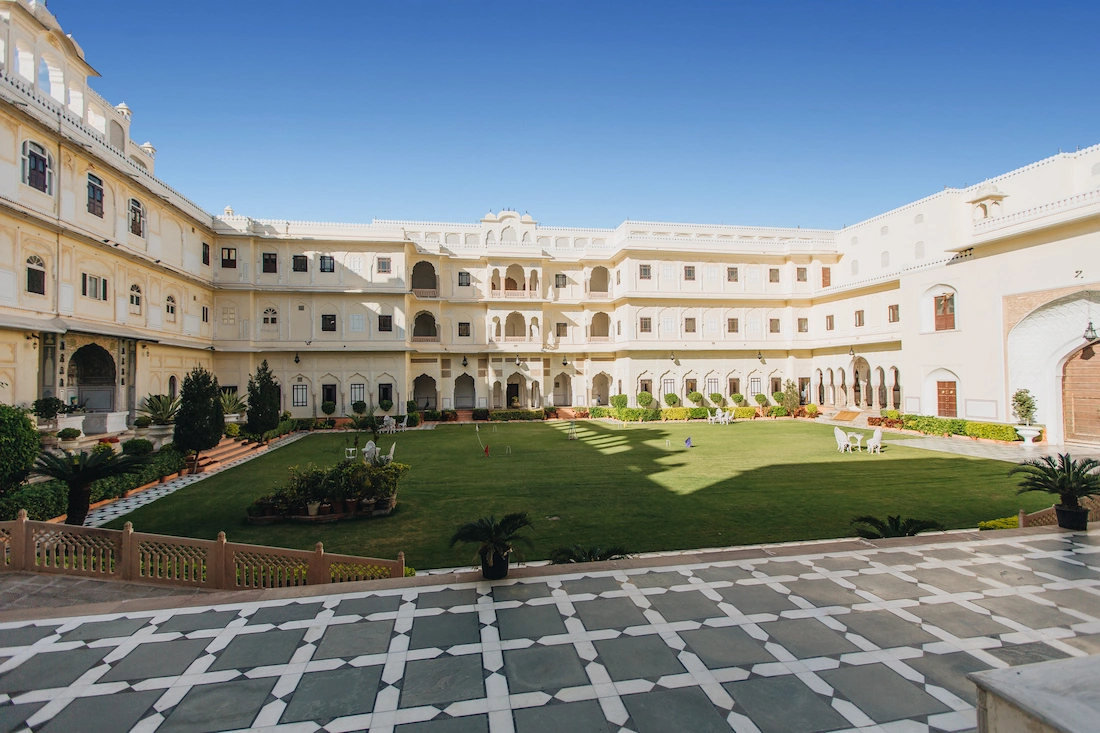
This courtyard was assigned to female members and the Maharani sahiba of the family.
SHAHI BAGH
This courtyard was assigned to the noble who came to visit the royal family members and the children of the family for sports
MOTI CHOWK
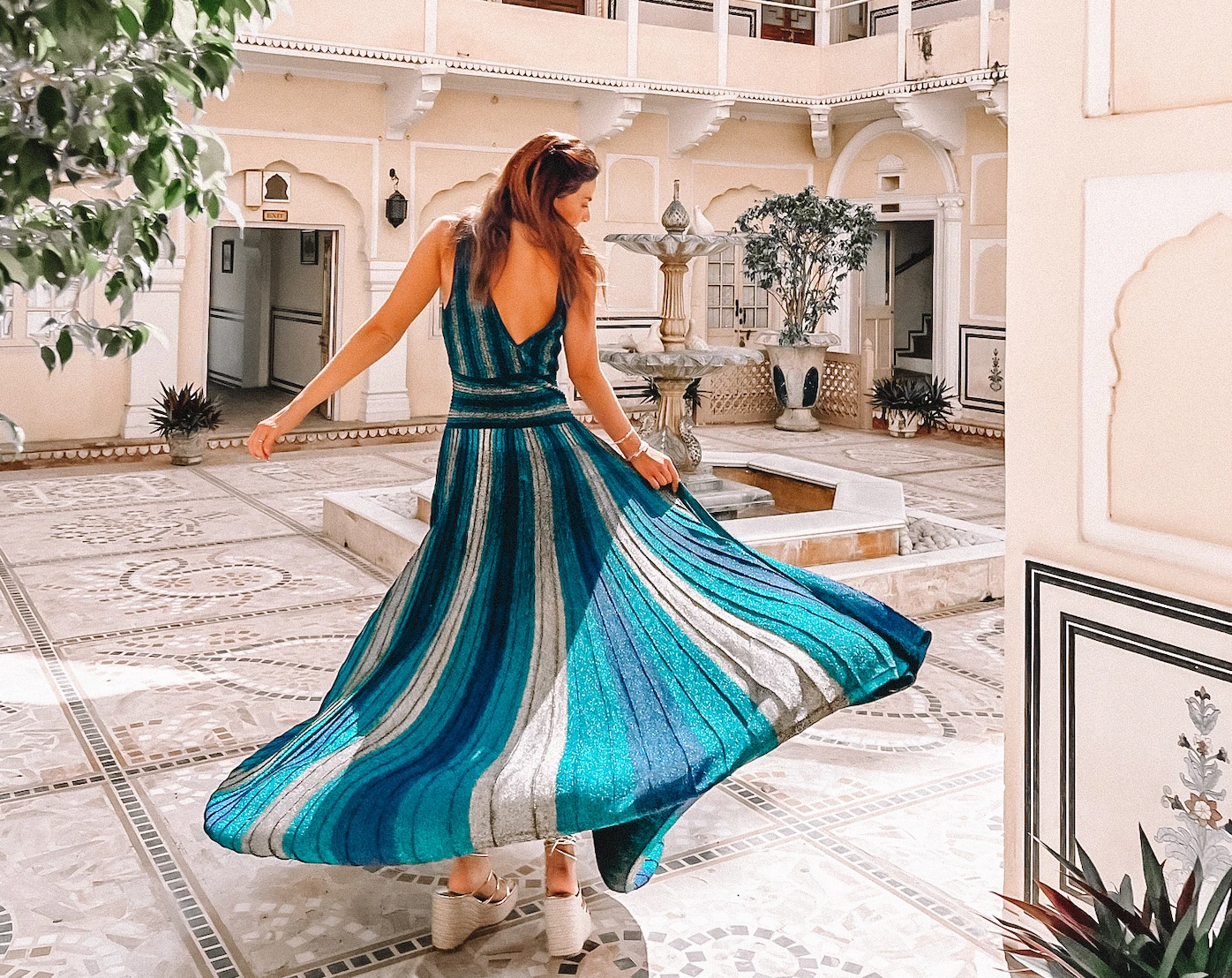
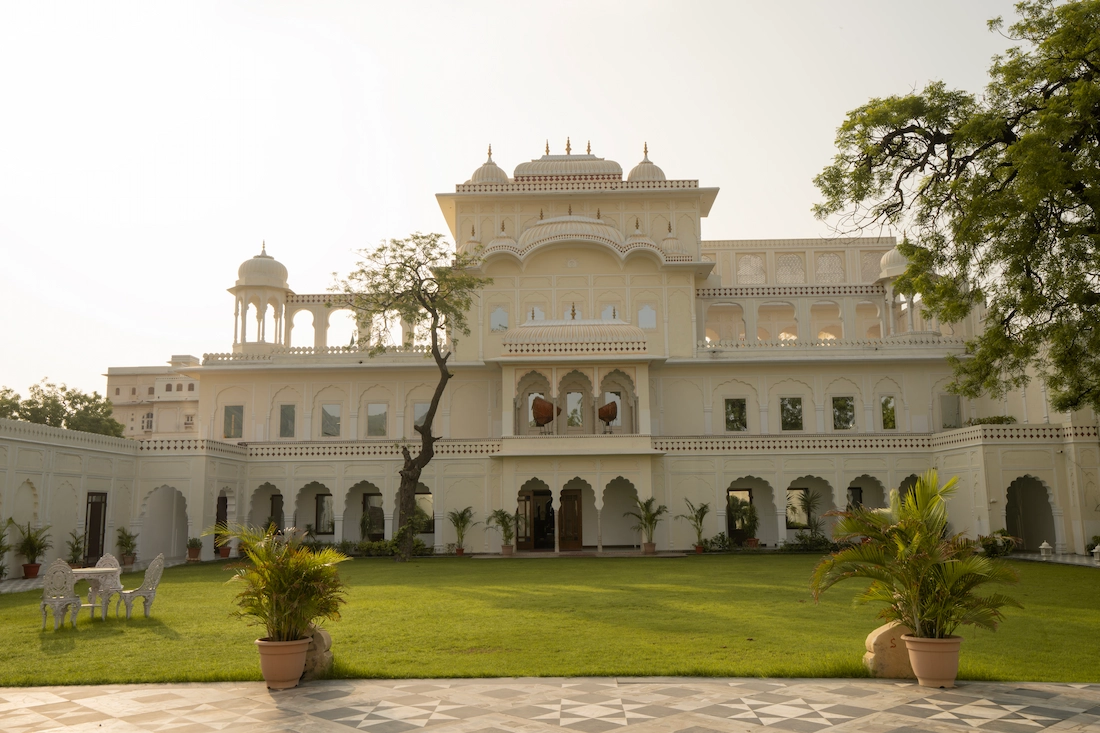
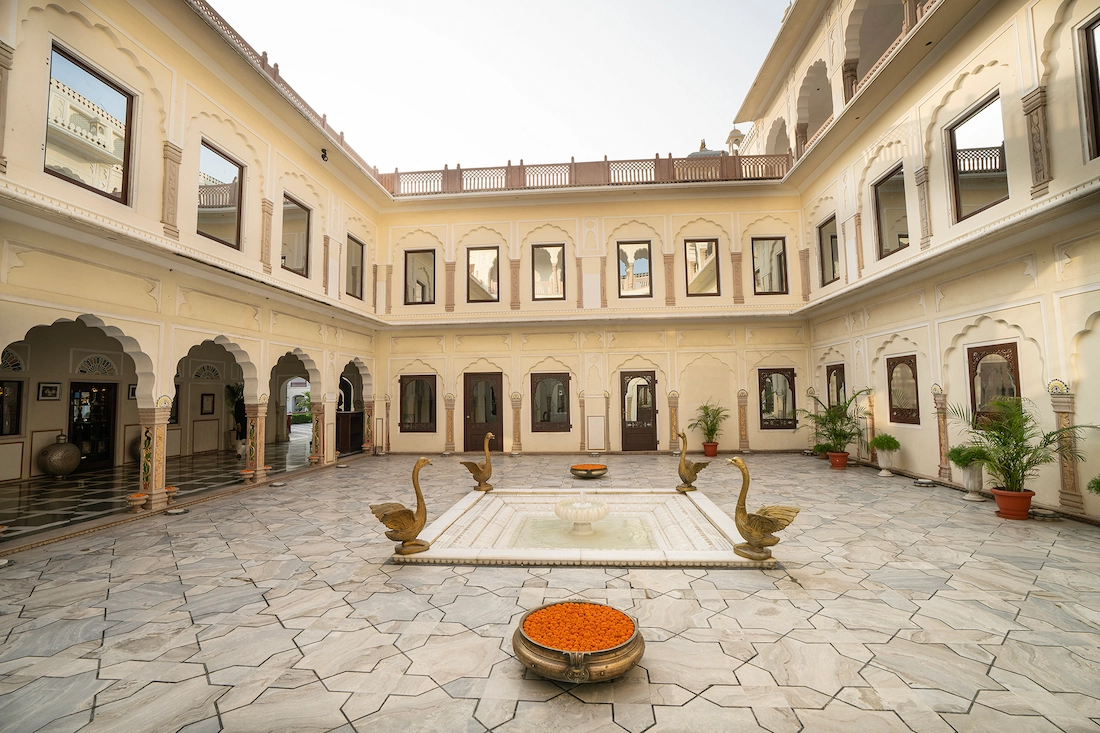
Laid in white marble and a beautiful fountain in the middle is there on the North west corner of the palace . If you have a chance to go to the lower areas of Taj Mahal, the design of this chowk is very similar to the Taj Mahal.
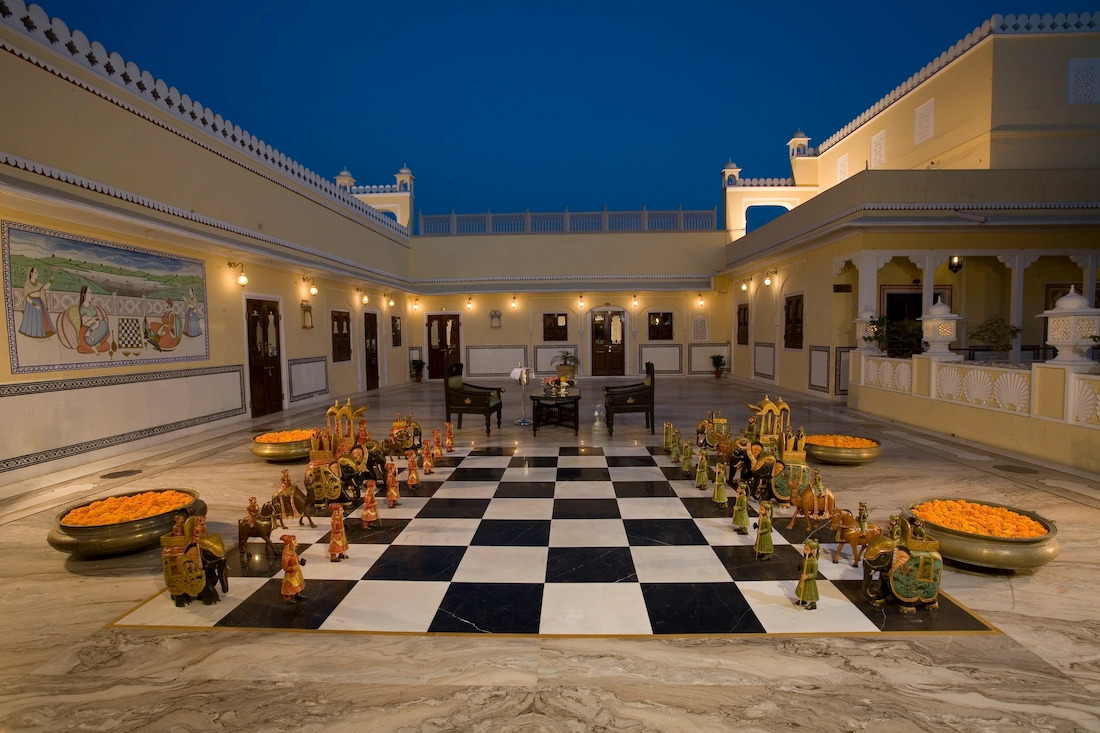
SHATRANJ CHOWK
This Royal Family courtyard was typical of Vastu architecture as these were the health zones of the palaces as they drew fresh light and air into the rooms of the palace.
The Raj Palace Promise
Each room and suite offers, personalized amenities, and access to the royal experiences of the palace—including curated museum tours, private dining, heritage rituals, and spa indulgences. Whether you’re seeking romance, celebration, or cultural immersion, your stay will be nothing short of legendary.