


 Est. 1727 · Jaipur, Rajasthan
History
Three centuries of valor, grandeur & living legacy
The Raj Palace
The Raj Palace, the traditional architecture with some of the modern structures robs the town of its singular character and charm. This beautiful blend of Mughal and Periodic architecture is the oldest mansion of Jaipur.
In 1995, the royal family decided to restore this luxurious palace into the finest luxury Palace hotel. The Royal family renovated the arched corridors, the residential quarters and its courtyards with small amplifications, Best services were added like Handicap access etc.
Museum suites were created which have the finest Royal antiques giving the property the honor of being first museum suite palace hotel of the world as the suites have their private museum. The specially designed frescoes deciphered with the finest mirror and hand painted work and rare palace furniture , Large crystal chandeliers leave you adorned with an astonishing fantasy. The elegance personified and the renowned hospitality is served in its 70 well-appointed rooms and beautiful venues with extreme intimacy and caring personal service in the reborn Raj Palace.
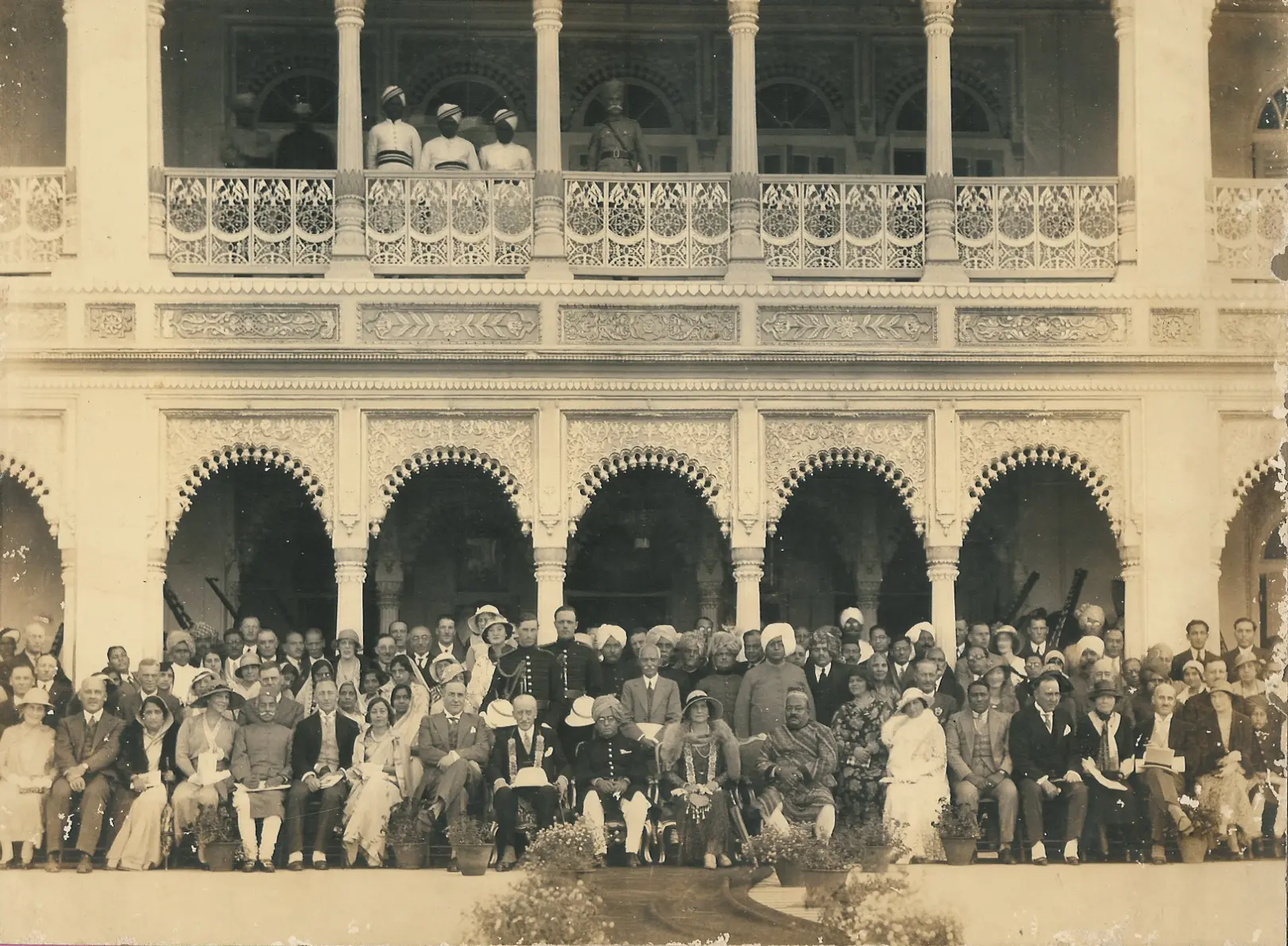
Three Centuries of Royal History
The Warriors of Chaumoo
When Sikander Lodi ruled Delhi in 1503 AD, Maharaja Prithviraj Singh Ji governed Amber. His descendant Thakur Manohardas Ji — Prime Minister of Amber in 1568 AD — was among the greatest Rajput warriors. He ruled Chaumoo, Samode, and Mohanna, winning 22 battles including the battle of Kandhar in Afghanistan, returning with the original flag of Amber and a great fortune of wealth.
The First Haveli of Jaipur
Thakur Mohan Singh Ji built the first haveli of Jaipur in 1727 — "The Chaumoo Haveli." Still inhabited by his descendants today, it was renamed after Thakur Raj Singh Ji, the last crowned Thakur Sahib of Chaumoo. In 1889, Thakur Gobind Singhji received the title of "Rao Bahadur" from the British Government for his excellent services and loyalty.
A Heritage Hotel is Born
Thakur Raj Singhji succeeded the Chaumoo state, and The Raj Palace was named in his honor. In 1995, Princess Jayendra Kumari Ji restored this magnificent haveli into the finest luxury heritage hotel — earning the world's first Museum Suite Heritage Hotel honour, with 70 opulent rooms and priceless royal antiques.
Glimpse of Royal Life
Indian Courts
India was portrayed as land populated with monsters, magicians and maharajas; its rulers were immeasurably powerful potentates enthroned in vast citadels surrounded by every conceivable luxury, but Indian courts were not accessible to the gaze of foreign observers and the royal architecture continued to be mysterious and alluring. Indeed, this ‘exotic’ appeal of Indian palaces has proved to be long-lasting; it has survived the colonial experience and exists till today in the Royal residences as fortified citadels, complete with massive walls and defensive gateways, as well as armories, barracks and stables and all the culture and richness developed over centuries still lies here preserved in these palaces.


Divine Rights of Royals
The old belief that governed the architecture and design “Divine power of Royals” Whether great or small, Indian monarchs never hesitated to style themselves as maharajas, or ‘great kings’, in the belief that their powers were cosmic rather than worldly. They were ‘great kings’ in terms of royal rituals and ceremonies, if not always in authority and influence. To demonstrate regal command over the elements of water and earth. Resplendent with heavenly motifs such as the globe of the sun, the royal throne and furniture was sumptuously ornamented with gold, silver, rubies and diamonds, the treasures of the earth. Sun motifs appear on the walls and ceilings of palace, suggesting the beneficial influence of the heavens. The gleaming sun with radiating spokes as dynastic emblem. Is Placed over the top of the palace
Forces of Nature
Parades of elephants, horses and other animals were further expressions of the king’s cosmic potency. Elephants and horses, perhaps more than any other animals in India. Only kings were permitted to own elephants, and only kings could import horses and other exotic beasts. Lions and mythical beasts were particularly popular; so too were peacocks, As they were used as symbolic to be used to demonstrate command and power even over them.


The Royal Dining
The Art of Hospitality and Grandeur
In the royal courts of India, dining was far more than nourishment — it was an expression of statecraft, artistry, and divine grace. Among all the activities that animated the life of a palace, none equaled the splendor and symbolism of the Durbar — the formal reception and banquet of the royals. From the 16th century onward, the word Durbar — derived from Persian — came to represent the very heart of royal culture. It was here that power and poetry met across laden tables, and where the Thakur Sahib of Chaumoo, seated in dignity beneath mirrored ceilings, received guests with honor befitting his lineage. The Raj Palace, being the first haveli of Jaipur and the residence of the noble Chaumoo family, became the center of such gatherings — blending politics, ceremony, and cuisine into one seamless experience of magnificence.
The Grandeur of the Royal Durbar
Each Durbar was a theatre of authority and elegance. Grand occasions — such as coronations, festivals, royal birthdays, and foreign visits — drew a glittering assembly of princes, generals, ministers, and religious advisers. The courtyards and pavilions overflowed with sound and color: trumpets announcing the ruler’s arrival, silk canopies fluttering in the desert wind, and guards standing in formation with silver spears. Some durbars were intimate councils — private audiences held in the Diwan-i-Khaas, the Hall of Private Reception, where the ruler met his closest confidants. Others were public assemblies in the Diwan-i-Aam, where the people of the realm could seek justice or offer tributes. On festival days, vast awnings were stretched to extend the audience hall, and feasting tables replaced council benches. Perfumed water was sprinkled upon the marble floors, and incense rose like mist as the court musicians played ragas in the background. It was in these moments that royal dining became an act of ceremony - a visual proclamation of prestige and benevolence.
Architecture of Indulgence
The dining pavilions of The Raj Palace are masterpieces of sensory design. Arched corridors, double-height porticoes, and frescoed ceilings transformed simple halls into realms of refinement. The Sheesh Mahal, or mirror pavilion, stands as the epitome of this artistry — every wall and vault encrusted with tiny mirrored tiles that multiplied the soft glow of a thousand lamps. Courtiers and royal women could observe the festivities from the upper jharokhas behind pierced marble screens (jaalis), ensuring modesty without losing the spectacle below. When night fell, the entire palace shimmered — reflections of candlelight danced across mirror mosaics, gold-leaf patterns, and silver trays, casting a dreamlike brilliance upon every meal.
“Every meal at The Raj Palace is still a Durbar in spirit — a ritual of hospitality, a harmony of taste and tradition, and an invitation to experience the timeless elegance of royal Rajasthan.
The Raj Palace · Swapna Mahal Restaurant · Since 1727

The Feast Ceremony
The royal dining experience followed a choreography of ritual. Meals were served in silver thalis placed upon low tables draped in silk, surrounded by cushions embroidered with pearls. Each course arrived with ceremony — rose sherbet to cool the palate, spiced lentils in carved vessels, Rajasthani breads baked in clay ovens, and delicacies of Mughal origin blending saffron, almonds, and rose essence. Servants in crisp turbans moved silently, trained in the refined etiquette of presentation. Guests were sprinkled with attar of rose, offered betel leaves after dessert, and serenaded by musicians performing soft ragas that complemented the cadence of the evening
The Courtyard of Celebration
Beyond the formal halls, open courtyards and terraces became the stage for night-long feasts. During Diwali, every arch and dome was illuminated by oil lamps, while trays of sweets and spiced wine circulated among nobles and guests. On royal anniversaries, elephants adorned with gold trappings stood at the gates, while fireworks illuminated the sky above the palace domes. These celebrations were not mere indulgences; they were acts of devotion — offerings of gratitude to the gods, the ancestors, and the people who sustained the royal lineage.

The Legacy Today
In its modern form, The Raj Palace continues to uphold the art of royal dining through its magnificent Swapna Mahal Restaurant, which recreates the splendor of these ancient banquets. Under glimmering chandeliers and beneath frescoed arches, guests today dine on recipes once reserved for kings — dishes that combine the heritage of Rajputana with the finesse of imperial Mughal kitchens. Every meal at The Raj Palace is still a Durbar in spirit — a ritual of hospitality, a harmony of taste and tradition, and an invitation to experience the timeless elegance of royal Rajasthan.
The Royal Accommodation
The Royal Women
According to long-standing Indian tradition, a royal court's female members had to be continuously segregated from the palace's public areas. Royal women stayed in restricted, well-guarded quarters commonly known as 'zenanas'. Rajput zenanas usually consisted of four apartments with solid external walls that looked upon an open, spacious courtyard. These quarters were located at the extremities of royal complexes and contained various pavilions, rooftop walkways and terraces. Each individual suite was made up of a pair of chambers connected by a small courtyard and was within easy reach of the presiding maharaja.
.jpg)
.jpg)
The King's Private Quarters
Like the royal women who resided in the zenanas, Maharaja himself at times required seclusion from public activities. His apartments would be kept under the strictest guard and only those summoned by him could enter. In other parts of the palace designed for his entertainment, Maharaja and his male guests would spend hours smoking hookahs, reciting poetry and listening to musical performances
Royal Guests
Special private quarters for visiting nobility were located on the lower floor of the palace or in annexes around the main building. This way, they could be easily connected to the Diwan E Khaas, where the private Durbar was held, or the Daftar Khana, where the official Durbar was held. Best designs and ornamentations were used to impress the guest with the high taste and wealth.


The Prince's Suite
From childhood, princes were raised to lead an army and protect their people from evil and aggression. Princes were not only schooled in the art of war, but also taught about legal matters and the virtues of charity. To cosmically enhance a prince's formal education, his room was decorated with various battle scenes and handmade weapons.
Pleasure Pavilion
Royal architects provided Maharajas with suitable, intimate settings within the palace in which they could spend time with their queens and concubines. Miniature paintings created at the Mughal and Rajput courts give a good idea of the eroticism involved with court life. An often-repeated scene shows a king at night accompanied by one or more female companion sitting in an upper pavilion of the palace, or laying on a terrace beneath an awning. Cushions are spread out and there are cups for wine and other intoxicating drinks, as well as trays filled with fruits and sweetmeats. Female attendants, discreetly posed to one side, were even present at the most private of moments.

The Royal Adventures

The Spirit of the Rajput Nobility
In the princely days of Rajasthan, life within the palace walls was not confined to opulence and ceremony alone. The Maharajas and Thakurs of Chaumoo, much like their royal counterparts across India, were men of valor, curiosity, and indulgence. Their days blended statecraft with sport, and their leisure mirrored their lineage — a celebration of bravery, beauty, and boundless freedom. Each sunrise at The Raj Palace heralded not only another day of governance but also the promise of adventure. For these rulers, life was an ongoing expedition — from the thrill of the hunt to the grace of royal entertainment and the serenity of moonlit gatherings by the pool.
The Royal Shikaar: The Hunt of Kings
No pastime better captured the Rajput spirit than the Shikaar, the royal hunt. Accompanied by a glittering entourage of nobles, soldiers, and trackers, the Maharaja would ride out at dawn into the forests and plains surrounding Chaumoo and Samode. The rhythmic sound of hooves, the distant calls of elephants, and the gleam of lances in the morning sun marked the beginning of a royal pursuit that was both a sport and a sacred ritual. Hunting was not merely about conquest; it was an expression of courage and kingship — a symbolic re-enactment of the eternal struggle between good and evil. Tigers, leopards, and deer were pursued with skill and reverence, their trophies later displayed in the palace galleries as emblems of valor and fortune. Evenings after the hunt were celebrated with music, poetry, and storytelling — tales of the day’s chase echoing through the marble corridors of The Raj Palace

.jpg)
Evenings of Art & Amusement
When the sun dipped below the palace terraces, another world awakened. The courtyards were illuminated with hundreds of oil lamps, their flickering reflections dancing upon mirror-clad walls. Courtesans and dancers adorned in silks and jewels performed the Kathak and Ghoomar, their anklets chiming in rhythm with the royal orchestra. The Maharaja, joined by his courtiers and guests, would recline on brocaded cushions, sipping sherbets and aromatic wines, while poets recited verses in Persian, Braj, and Sanskrit. These gatherings were more than entertainment — they were living expressions of refinement and artistic patronage, a hallmark of Rajput civilization.
The Maharani's Pool — A Moonlight Retreat
Beyond the grandeur of the durbars and dances lay a more intimate world — the Maharani’s Pool, hidden within the zenana courtyard. This secluded marble pool was the private retreat of the queens and princesses, a sanctuary where they bathed, conversed, and found respite from the desert heat. At night, under a canopy of stars, the Maharaja would often join the Maharani and her companions for leisurely swims, the water scented with rose petals and floating lamps. The soft laughter of the court ladies, the glow of torches, and the reflection of moonlight upon rippling water created scenes of romance that later found their way into miniature paintings and royal poetry.

.jpg)
The Royal Safaris and Picnics
The most cherished of all royal adventures were the safaris and excursions into the countryside. Mounted on richly caparisoned horses or seated in howdahs atop elephants, the royal party would set out to explore nearby lakes, forests, and villages. These were not mere outings but ceremonious processions — with banners fluttering, musicians leading the way, and guards riding in formation. Once they reached their destination — a shaded grove, a shimmering lake, or a hillside fort — the courtiers would lay out carpets and silk tents. Silver trays filled with fruits, sweets, and delicacies were brought forth, and royal picnics would continue till twilight. The Maharaja and his companions would fish, shoot waterfowl, or simply recline by the water’s edge, surrounded by nature and nobility alike.
The Essence of Adventure
For the royals of The Raj Palace, adventure was not a diversion but a way of life — a union of nature, courage, and luxury. It reflected their dual identity: warriors by blood, connoisseurs by choice. Even today, the echoes of those journeys can be felt in the palace’s arcades and gardens — the scent of the wild mingling with the fragrance of jasmine, the laughter of courtiers replaced by the quiet hum of heritage. In every arch and courtyard, one can still sense the pulse of an era when leisure was art, and adventure was the mark of royalty.

The Royal Courtyards & Gardens

The Heart of The Palace
In the Rajput tradition, a palace was not merely a residence — it was a living organism with a heartbeat. At The Raj Palace, that heartbeat echoes through its courtyards and gardens, where light, air, and water converge in perfect harmony. Each courtyard, or chowk, was designed as a sacred space — a reflection of the ancient Indian principle of vastu shastra — blending symmetry, purpose, and divinity. From the moment one passes through the grand pol (gateway) into the first forecourt, the palace unfolds in rhythmic layers, moving from the public to the private, from the earthly to the ethereal.
The Sequence of Courtyards
The spatial order of The Raj Palace follows a graceful progression that mirrors both royal hierarchy and the journey of the senses.
- The Public Courtyard (Diwan E Aam)
This broad stone-paved court once served as the venue for royal audiences, military inspections, and grand receptions. Its arcaded corridors provided shelter for courtiers, guards, and musicians, while the central fountain cooled the desert air. Even today, the courtyard retains the aura of ceremony and spectacle.
- The Inner Residential Courtyard
Beyond the formal spaces lies the heart of the royal household — a quiet, shaded court lined with carved jharokhas (balconies) and jaali screens that filter sunlight into delicate patterns. Here, the royal family gathered for evening prayers, poetry recitals, and moonlit dinners. Its calm geometry ensured privacy, comfort, and peace for the women of the zenana and the young princes being raised within.
- The Service Courtyard
Hidden from view yet essential to palace life, the service courts were home to the rhythms of daily activity — from the kitchens to the stables and storerooms. The sound of brass vessels, the scent of sandalwood, and the rustle of silks in motion once filled these passages, linking the palace's grandeur to its heartbeat of human hands.


The Royal Gardens
Every garden at The Raj Palace is a composition of geometry and grace, a physical manifestation of paradise on earth. Inspired by the Mughal charbagh (four-part garden), the palace gardens are divided by marble walkways and water channels that mirror the sky above.
- Design and Layout
Shaded pathways bordered by jasmine, frangipani, and bougainvillea create a sensory tapestry of color and fragrance. Ornamental fountains and lotus basins serve both aesthetic and climatic purposes — cooling the air while symbolizing purity and renewal.
- The Maharani's Garden
Located beside the zenana quarters, this secluded garden was once reserved for royal women. Fragrant night-blooming flowers like rajnigandha and chameli scented the evenings as the queens strolled under moonlight, attended by their handmaidens. Delicate marble benches and terracotta lamps framed these intimate moments of reflection and conversation.
- The Pleasure Pavilion and Garden Terraces
At the upper levels, terraces framed with chhatris (domed pavilions) offered commanding views of the city beyond. Here, the Thakur Sahib would host poetic gatherings, music performances, and celebrations. The soft sound of fountains and the play of candlelight on mirrored walls transformed these spaces into ethereal realms of beauty.
Symbolism And Spirit
Every element of the courtyards and gardens was deeply symbolic.
- Fountains
The fountains represented the sacred rivers of India — Ganga, Yamuna, Saraswati.
- Lotus Motifs
The lotus motifs symbolized enlightenment and royal virtue.
- Sun Emblems
The sun emblems atop gateways reminded visitors that the lineage of the rulers was divine, descendants of the solar dynasty.
The placement of water channels, the flow of breezes through arches, and the rhythmic repetition of domes and balconies were not mere design choices — they were acts of devotion to balance, nature, and beauty.

.jpg)
The Live Heritage
When The Raj Palace was restored in the 1995s, its courtyards and gardens were carefully revived using traditional materials — sandstone, marble, and hand-polished lime plaster — ensuring that every corner retained its original serenity and splendor. Today, these spaces continue to host royal dinners, cultural evenings, and wedding processions, echoing once again with music and laughter. Guests who walk through these courts trace the same paths once walked by kings and queens — surrounded by whispering fountains, painted arches, and the eternal fragrance of royal history.
The Royal Weddings
A Legacy of Love & Lineage
For centuries, The Raj Palace has been the setting of majestic unions that shaped dynasties and alliances across Rajasthan. Every wedding within these walls carried not only the joy of two souls uniting but also the honor of continuing a noble bloodline. From the earliest Thakur Sahibs of Chaumoo to the last crowned royals, each marriage was marked with divine rituals, cultural splendor, and timeless grace — transforming the palace into a living poem of love and tradition.

Rituals & Sacred Ceremonies
Royal weddings began with auspicious rituals invoking the blessings of the family deities. The palace priests conducted ceremonies in marble courtyards adorned with fresh marigolds and sandalwood garlands. The Ganesh Sthapana (invocation of Lord Ganesha) and Mehfil-e-Sangeet (evening of music) set the tone for the days ahead. The air filled with the rhythmic beats of dholak and the fragrance of rosewater and ghee lamps. The Haldi and Mehendi rituals took place in the inner zenana courtyards — a domain once reserved for royal women — where the bride was surrounded by her companions, adorned in saffron and gold. The patterns drawn on her hands mirrored the intricate jaalis and arches of the palace itself, symbolizing eternal prosperity and union.
The Royal Procession
On the day of the wedding, the Baraat, or royal procession, was a magnificent display of regality. Elephants draped in embroidered velvet, horses with golden bridles, and torchbearers in crimson turbans filled the lanes leading to the palace gates. The groom, dressed in brocade and pearls, rode beneath a silver parasol while musicians played traditional shehnai and nagadas. From the upper balconies and jharokhas, royal ladies watched the procession pass through the grand pol (gateway) into the main courtyard, echoing the grandeur of eras past.
The Wedding Mandap
The sacred mandap, constructed beneath a canopy of silk and flowers, was placed in the palace’s central courtyard, aligned under the open sky to honor the cosmic witnesses — the sun, moon, and stars. Priests recited Vedic hymns as the couple exchanged garlands and circled the sacred fire (Agni), pledging seven eternal vows. The chants, the music, and the soft illumination from oil lamps transformed the courtyard into a celestial theatre of devotion and destiny.
Royal Banquets & Celebrations
Following the ceremony, the royal kitchen came alive. Chefs prepared grand feasts in silver platters — from traditional Rajasthani delicacies like Dal Baati Churma, Laal Maas, and Gatte ki Subzi to exquisite Mughlai and Persian-inspired dishes that reflected the dynasty’s cosmopolitan taste. The Swapna Mahal, now The Royal Dining Room, glowed under crystal chandeliers as courtiers, family, and foreign dignitaries toasted to the new union. Courtyard performances of kathak, classical music, and puppet plays carried the night into dawn.

A Heritage Revived
Today, The Raj Palace continues this magnificent tradition by hosting Royal Heritage Weddings that blend authentic Rajput rituals with contemporary elegance. Couples from around the world arrive to be wed beneath the same arches where kings and queens once vowed their eternal love. Each wedding is curated to recreate the pageantry of the past — with elephants, palanquins, fireworks, and classical performances — ensuring that every moment resonates with the grandeur of a bygone age. In every chant, every lamp, and every note of music, The Raj Palace revives the essence of royal love — a timeless union blessed by history itself.
The Royal Events
Legacy of Celebration
From its earliest centuries, The Raj Palace has been the ceremonial heart of Chaumoo’s ruling family. Each generation marked its victories, alliances, and divine festivals with grandeur that echoed through the marble courtyards and mirrored halls. The royal calendar moved in rhythm with the seasons — harvests, coronations, birthdays, and the great festivals of Jaipur — transforming the palace into a living stage of Rajput pageantry.


The Darbar Tradition
The most important of all courtly gatherings was the Durbar, derived from the Persian term meaning “court.” Here the Thakur Sahib presided in regal authority, surrounded by nobles, commanders, and religious advisers. Some durbars were grand public affairs held in the Diwan-i-Aam, where petitions were heard and proclamations made; others were intimate audiences in the Diwan-i-Khaas, reserved for high ministers and visiting royalty. Ceremonial canopies, guards with silver spears, musicians with nagadas (drums), and perfumed lamps created an atmosphere that proclaimed the dignity of rule.
Festival & Seasonal Ceremonies
Throughout the year, The Raj Palace shimmered with light during festivals like Holi, Diwali, and Gangaur. On Diwali eve, thousands of oil lamps traced every cornice and arch, their reflections dancing in the Sheesh Mahal’s mirrors. Holi brought clouds of color to the courtyards, while Gangaur processions led by royal ladies in ornate palanquins moved toward the palace gardens. Each celebration reaffirmed the dynasty’s connection to prosperity, fertility, and divine favor.


Banquets, Feasts & Performing Arts
Evening gatherings showcased the refinement of Rajput hospitality. Musicians played the sitar and sarangi, court dancers performed the kathak, and poets recited verses in Persian and Braj. The aroma of rosewater and sandalwood mingled with the rich cuisine of the royal kitchen — silver-plated thalis laden with traditional dishes, now recreated in The Royal Dining Room of the modern hotel. These events were as much about aesthetics as allegiance — the theatre of power expressed through taste, rhythm, and decorum.
Modern Celebrations
Today, The Raj Palace continues this lineage through Royal Events & Banquets — regal weddings, diplomatic receptions, and cultural evenings that revive the spirit of the old durbars. Each event unfolds across the same courtyards and halls once used by kings and queens, preserving the grandeur of the past while welcoming the world to experience living heritage

Princess Jayendra Kumari Ji
In 1995, Princess Jayendra Kumari Ji decided to restore this luxurious palace into the finest luxury heritage hotel. The Royal family renovated the arched corridors, residential quarters, and courtyards with careful amplifications. Museum Suites were created housing the finest royal antiques — giving the property the honour of being the World's First Museum Suite Palace Hotel.
Over the centuries, The Raj Palace stood not just as a residence, but as a silent witness to Jaipur's evolution — from royal ceremonies and grand celebrations to the city's modern transformation — carefully preserving the grandeur of its origins in 1727 AD.